

The counter is covered. Tomatoes in the sink, tomatoes in a mixing bowl, and a zucchini that got away from you last week and is now the size of a forearm. Every search result offers a six-hour canning project. You have forty minutes.
One fact organizes the whole page: tomatoes and zucchini look like the same problem and they are not. Tomatoes sit right at the pH 4.6 line dividing high-acid from low-acid foods, which is why Penn State names them a borderline food needing added acid before canning. Summer squash sits above pH 5.0, solidly low-acid. That number decides everything downstream. The full decision tree about which canner a given food actually requires lives elsewhere on this site; this page assumes you don't own one tonight.
You have forty minutes. Here is the tier list.
| Tier | Method | Why it lands here |
|---|---|---|
| BEST | Freeze — tomatoes whole and raw, zucchini grated and blanched | Fast, sanctioned, works tonight |
| GOOD | Roast-then-freeze; two tested boiling-water zucchini recipes | Better flavor or shelf-stable, costs real time |
| CAREFUL | Drying; refrigerator and freezer pickles; sloppy headspace | Real, but shorter-lived than assumed |
| DANGEROUS | Un-acidified canned tomatoes; plain canned zucchini; oil on the counter | No tested process, or a missing safety step |
BEST: freeze tomatoes whole, raw, skins on
Wash the tomatoes, dry them, spread them one layer deep on a sheet pan, freeze solid, bag them. No blanching. No acid. No peeling.
Illinois Extension grants all three permissions in one place: tomatoes headed for the freezer need no acidification, no peeling, and — unlike most vegetables — no blanching. Iowa State AnswerLine blesses it for the time-crunched specifically: freeze them with skins on, and the skins slip right off as they thaw. Tray freezing takes about an hour before the pieces release into bags. For rigid containers, NCHFP calls for 1-inch headspace.
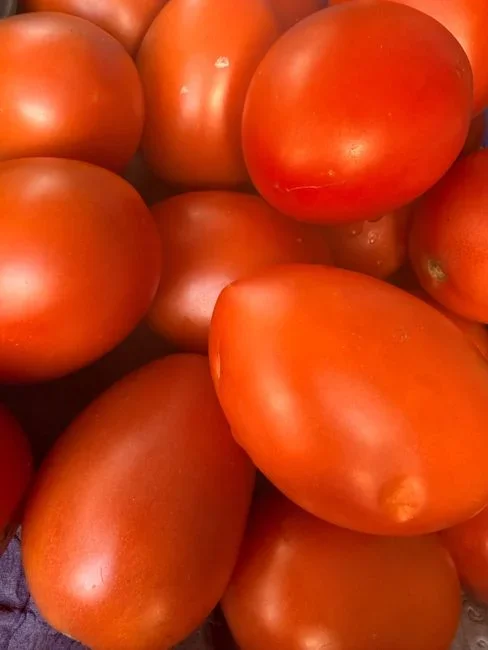
The limit, said out loud: these are cooking tomatoes, not salad tomatoes — NCHFP notes thawed tomatoes won't be solid and should be used only for cooking or seasoning. Penn State warns that raw whole tomatoes may turn watery and develop an off-flavor after a month in the freezer, and Utah State calls puree and juice the better keepers. Tray freezing buys weeks; roasting or pureeing buys months. For what you'll eat fresh this week, the rules for keeping produce usable on the counter matter more.
BEST: shredded zucchini in measured bags — and the one step most blogs skip
Zucchini gets no such shortcut. Grate young, tender zucchini. Steam-blanch it in small batches for 1 to 2 minutes, until translucent. Cool it, pack it in the exact amount your bread recipe calls for, leave ½-inch headspace, press the air out, freeze.
Every food blog says grate and bag. Every tested source says blanch. Iowa State explains why: unblanched squash keeps running its enzymes and goes tough, while blanched, properly packaged squash holds quality for roughly 10 months. Skip the blanch if you must, but treat that bag as use-it-soon. NCHFP warns that underblanching is worse than no blanching — a rushed dunk wakes the enzymes instead of stopping them.
Don't wring the shreds dry first. NCHFP's direction is to pack measured amounts and discard the liquid later if the thawed zucchini is watery — easier than wringing shreds tonight.
GOOD: roast the tomatoes first
The upgrade for whatever outlasts your next few weeks of cooking. Illinois Extension's routine for a cherry-tomato flood is olive oil and a hot oven — 450°F for 20 to 25 minutes, until they blister and split — then straight into freezer bags. It beats raw freezing because the water is already gone — no watery thaw to manage. Simmered juice and stewed tomatoes do the same. Illinois puts the quality window for frozen produce at 8 to 12 months.
GOOD: the two tested zucchini recipes that need no pressure canner
There are exactly two USDA-tested ways to put zucchini in a shelf-stable jar with an ordinary boiling-water canner, and both work by drowning a low-acid vegetable in acid. The acid load is the recipe.
| Tested recipe | What makes it safe | Boiling-water time (0–1,000 ft) |
|---|---|---|
| Zucchini-Pineapple | 4 qts zucchini carries 46 oz unsweetened pineapple juice plus 1½ cups bottled lemon juice | 15 minutes, half-pints or pints, ½-inch headspace |
| Pickled Bread-and-Butter Zucchini | 16 cups zucchini against 4 cups of 5% white vinegar, after a 2-hour salt soak | 10 minutes, pints or quarts, ½-inch headspace |
Both times are for 0 to 1,000 feet; canning times change with elevation, so pull your row from the recipe page itself, not from this summary. Iowa State draws the boundary in a sentence: zucchini may be canned only when paired with tomatoes or with pineapple juice, sugar and lemon juice, using a tested recipe. That tomato pairing — Tomatoes with Okra or Zucchini, roughly 3 pounds tomatoes to 1 pound zucchini, 1-inch headspace, 30 minutes for pints and 35 for quarts at 11 PSI on a dial gauge or 10 PSI weighted at 0–1,000 feet — is pressure canner only.
CAREFUL: the methods that are shorter-lived than advertised
Refrigerator and freezer pickles keep days, not seasons
Quick pickles are a lovely way to eat a glut, not a way to store one. For pickled squash, Iowa State says eat it within 7 days. The six-month figure people repeat online comes from Colorado State and applies to fully fermented sauerkraut and long-brined dills, not quick-brined zucchini rounds; that same page calls canning the only recommended procedure for fresh-pack pickles.
Freezer pickles are the middle path: salt thin slices, drain, cover with sugar-vinegar syrup, refrigerate 24 hours, freeze with ½-inch headspace, and once thawed refrigerate and use within two weeks. Penn State wrote that recipe for cucumbers, not zucchini, so swapping in squash isn't tested.
Drying works — count the hours before you start
Drying gives the most compact result and the longest shelf life. It is not quick. Colorado State's oven method means holding 140°F with the door propped open, blanching squash 4 minutes, drying 10 to 16 hours, then conditioning 4 to 10 days before jarring — and it warns home ovens often can't hold a steady low setting, so verify with a calibrated thermometer. Iowa State's dehydrator numbers are 135–140°F for 10 to 12 hours, with 10 pounds of squash shrinking to about ¾ pound dried; Utah State dries zucchini at 125°F until brittle for a year in a dark, moisture-proof jar. Penn State reports NCHFP rates summer squash poor for drying. If you try anyway, the oven and air-drying methods that skip the dehydrator are worth reading first.
Headspace, air, and what a freezer can't fix
Press the air out of every bag. In rigid containers, NCHFP's headspace table is ½ inch for dry pack and ½ to 1½ inches for liquid pack. Hold the freezer at 0°F. Keep two ideas separate: at that temperature food stays safe indefinitely while quality declines, and freezing doesn't kill bacteria — it only slows them. Produce that went in questionable comes out questionable. The rest of the packaging and rotation craft is in our guide to making frozen food last past the three-month mark.
DANGEROUS: four things that can actually hurt you
1. Canning tomatoes without added acid. The amounts are small and non-negotiable: 2 tablespoons of bottled lemon juice or ½ teaspoon citric acid per quart, half that per pint. Bottled, not fresh — Penn State's reason is that bottled juice holds a constant acidity while one lemon varies from the next — and don't confuse citric acid with ascorbic acid, which colors fruit and does not acidify it. Owning a pressure canner doesn't buy you out of this step: NCHFP states that the pressure options were not developed for un-acidified tomatoes. Same page: don't can tomatoes from dead or frost-killed vines.
2. Canning plain zucchini in any canner. USDA withdrew its old summer-squash processing times because the documentation behind them could not be found — soft squash packs tight in the jar, so heat can't be trusted to reach the middle the same way twice. Utah State puts the answer in capital letters: do not home can zucchini. There's no home process to fall back on. Freeze it.
3. Editing a tested recipe. Cutting the lemon juice in Zucchini-Pineapple, swapping fresh lemons for bottled, scaling pints up to quarts, stretching vinegar with water. NCHFP's pickling rule is absolute: do not alter the vinegar, food, or water proportions, because a uniform minimum acid level throughout the jar is what prevents botulinum growth. Grandma's version isn't dangerous for being old — it's dangerous wherever it drifts from those numbers.
4. Vegetables sitting in oil at room temperature. Zucchini, garlic, dried tomatoes, or herbs in a jar of oil on the counter is the classic home botulism setup; NCHFP says garlic-in-oil held at room temperature is at risk for botulism. Refrigerate at 40°F or below for no more than 4 days, or freeze with ½-inch headspace. Don't try to judge a suspect jar by look or smell. If anyone has eaten from one, call Poison Control at 1-800-222-1222 or seek medical care rather than waiting to see.
Common mistakes
- Treating zucchini like a tomato. Only one of the two can be canned on its own.
- Giving shredded zucchini a rushed dip instead of the full steam blanch, which is worse than skipping it.
- Expecting whole frozen tomatoes to taste good in February. Roast or puree whatever you want past a month.
- Copying a canning time off a summary page without checking your elevation.
- Calling refrigerator pickles "preserved." For squash, that's a one-week product.
FAQ
How do I get the skins off frozen tomatoes?
Let them thaw and the skins slip off on their own, or pour boiling water over them. There's no warm-water middle step. Skins are optional for freezing but must come off before canning, where they interfere with even heat penetration.
Can I freeze grated zucchini without blanching it?
You can, and you'll lose quality on a known curve. Iowa State's 10-month window applies to blanched, properly packaged squash; unblanched shreds keep changing texture in the bag. It's a quality tradeoff, not a safety one.
Is zucchini-pineapple actually safe, or is that an old wives' tale?
It's a current USDA-tested recipe processed 15 minutes in a boiling-water canner at 0–1,000 feet. The acid is what makes it safe: 46 ounces of pineapple juice plus 1½ cups bottled lemon juice per 4 quarts of zucchini. A family version that trims the lemon juice is a different, untested product.
My tomatoes came off a vine that got hit by frost. Can I still can them?
No. NCHFP says not to can tomatoes from dead or frost-killed vines. Freeze them for cooking instead.
The takeaway: Freeze first and ask questions later — raw whole tomatoes and steam-blanched grated zucchini handle tonight's glut safely, and the acid rules only matter once you reach for a jar. Spend less. Live more. — The Thrifty Almanac





0comments