

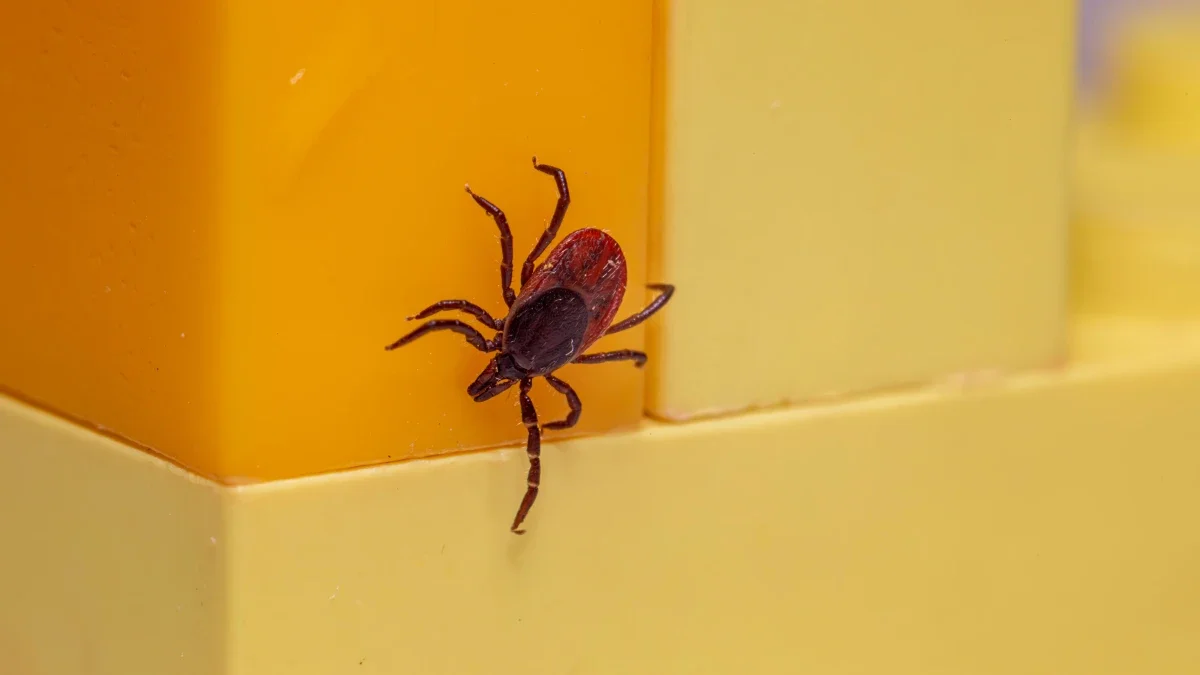
Every tick season the same reassurance makes the rounds: check for the bull's-eye, and if there's no ring, you're in the clear. It sounds tidy, and it feels like control. It is also the belief that sends people home from an infection that was still easy to treat, because the federal health record is blunt that a textbook bull's-eye is neither guaranteed nor required. As NIH's MedlinePlus Magazine puts it, "not everyone gets a rash."
Here's the honest version the "just watch for the ring" advice skips. A tick bite is not a Lyme diagnosis, and a small red dot the morning after a bite is usually nothing at all. What actually matters is a specific window of time, a short list of symptoms, and one clear line where watchful waiting turns into a phone call. This is general information, not medical advice — but knowing what the public health sources say makes that call easier to time.
WHAT a tick bite really means — and what it doesn't
Start with the thing folk advice gets backwards: most tick bites do not give you Lyme disease. Not every tick carries the bacterium, and the ones that do still need time attached to your skin. MedlinePlus names the culprit specifically — in the United States Lyme is "usually a bacterium called Borrelia burgdorferi" — and it is carried by the blacklegged tick, also called the deer tick. Other tick bites can transmit other illnesses, but they don't all carry Lyme.
Attachment time is the part people underestimate. According to MedlinePlus, "the tick must be attached to you for more than 24 hours to spread the bacterium to you." That is why prompt, correct removal is the single most useful thing you can do after finding a tick. The method is unglamorous but specific: "grab the tick as close to your skin as possible" with fine tweezers and "pull upward with steady, even pressure." No petroleum jelly, no lit match, no twisting — those folk tricks mostly waste time while the clock runs.
HOW to read the bite mark itself: a red spot that appears within hours and behaves like an ordinary bug bite — itchy, sore, fading in a day or two — is a skin reaction, not Lyme. The rash that signals infection follows a very different schedule, which is the next thing to understand.
The rash myth: a bull's-eye is common, not mandatory

The Lyme rash has a real name — erythema migrans — and a real timetable. MedlinePlus is precise about when it shows up: "Early symptoms of Lyme disease start between 3 to 30 days after an infected tick bites you." That gap alone separates it from an everyday bite reaction. The rash then grows outward over days, and it doesn't behave like poison ivy: MedlinePlus notes it "is usually not painful or itchy" and "may feel warm."
The bull's-eye is where the myth lives. MedlinePlus describes how the expanding rash "look[s] like a 'bull's-eye'" in some people — a red center, a clearer ring, and a red outer edge. But NIH's magazine is careful to say the early rash can also be "all red", not just a ring, and again, some people never develop a rash at all. Treating "no bull's-eye" as "no Lyme" is exactly the reasoning that misses early cases.
| Everyday tick-bite reaction | Erythema migrans (early Lyme rash) |
|---|---|
| Shows up within hours of the bite | Appears 3–30 days later |
| Stays the size of a bug bite | Expands over days; can grow several inches wide |
| Often itchy or sore | Usually not painful or itchy; may feel warm |
| Fades in a day or two | Persists and enlarges; sometimes a bull's-eye, sometimes solid red |
The warning signs that aren't a rash
Because a rash can be faint, oddly placed, or absent, the other early symptoms deserve equal weight. The MedlinePlus Medical Encyclopedia describes the first stage as flu-like, listing "Fever and chills, General ill feeling, Headache, Joint pain, Muscle pain, Stiff neck." NIH's magazine echoes the same cluster: "Flu-like symptoms—aches and pains, tiredness, fever, headaches" in the early stages.
WHY this trips people up: summer flu-like symptoms are easy to shrug off, especially without a memorable bite. The context is what changes the meaning. If you've been in tick country — tall grass, brush, wooded edges — and you come down with an unexplained fever and body aches a week or two later, that timing is worth mentioning to a clinician, rash or no rash. The tick bites page says the same in plainer terms: "If you develop any of these symptoms within several weeks of removing a tick, contact your provider."
WHY catching it early matters

This is the part that turns a nuisance into a reason to act. Left alone, the infection doesn't stay put. MedlinePlus is direct: "If it is not treated early, the infection can spread to your joints, heart, and nervous system." NIH's magazine spells out what "spread" can look like later — "paralysis of the muscles of the face (facial palsy)", irregular heartbeat, severe nerve pain, and arthritis with joint swelling.
The flip side is the encouraging part. According to the same NIH source, "If Lyme disease is caught early, oral antibiotics will cure most cases." That is the whole argument for not waiting: the early window is where treatment is simplest and most effective. What that treatment is, and whether you need it at all, is a decision for a clinician — this article won't name drugs or doses, because dosing is a medical judgment, not a blog's.
WHEN to see a doctor
Here is the line, drawn by the source itself. The MedlinePlus Encyclopedia says to "Contact your provider if you have: A large, red, expanding rash that may look like a bull's eye", or if you "Had a tick bite and develop weakness, numbness, tingling, or heart problems", or if you have possible Lyme symptoms after being where ticks live.
- Call your provider if an expanding rash appears at or near a bite site days to weeks later — even if it isn't a perfect ring.
- Call your provider if you get fever, chills, headache, fatigue, or joint and muscle aches within several weeks of a tick bite or likely tick exposure.
- Treat as urgent — the same-day or emergency kind of urgent — any facial drooping, heart palpitations or a fluttering/slow heartbeat, chest symptoms, or new weakness, numbness, or tingling after a tick bite. Those point to spread beyond the skin.
- Mention the bite anyway if a tick was attached a long time or you live where Lyme is common; your clinician may want to watch you or act early even before symptoms.
None of this is a substitute for a professional. This is general information, not medical advice — a real diagnosis comes from a clinician who can examine you and, when appropriate, order testing.
LIMIT: what a checklist can't do for you

Honest limits, because the topic invites overconfidence in both directions. Not every expanding red patch is Lyme, and not every case of Lyme announces itself with a rash — which is precisely why "I didn't see a bull's-eye" is not a clean all-clear. Blood tests have their own timing quirks in the earliest days after infection, so a clinician sometimes weighs your symptoms and exposure history alongside, or instead of, a lab result. Sorting that out is their job, not a symptom chart's.
The surest way to skip this entire decision tree is to get bitten less, and that's a yard problem as much as a skin problem. Reducing tick habitat where you actually spend time is covered in our guide to killing ticks in your yard, which fits into the broader DIY pest control guide. Prevention doesn't make the warning signs less worth knowing — it just means you'll need them less often.
The bottom line
A tick bite is not a verdict. Most bites pass without incident, the tick usually needs more than a day attached to transmit Lyme, and prompt removal tilts the odds in your favor. But don't outsource your judgment to a single rash shape. The signs that matter are an expanding rash — bull's-eye or solid — appearing 3 to 30 days later, plus flu-like fever, aches, headache, and fatigue after time in tick country. If those show up, or if you get facial drooping, heart symptoms, or new numbness after a bite, contact a provider promptly, because early treatment is where this disease is most manageable. This is general information, not medical advice; when a symptom lands on the "call your provider" list above, make the call and let a clinician decide.






0comments