


Your shower has gone from a spray to a dribble, and the internet has twenty explanations. But no authoritative source ranks the causes of low shower pressure by how often they happen — anyone telling you what's "usually" wrong is guessing.
So this guide ranks them by how cheap each is to rule out: free checks, then the dollar fix, then the gauge.
The one question that cuts the problem in half
Run the shower until it's dribbling, then open a cold tap elsewhere in the house, ideally on another floor. That one test eliminates roughly half of what follows.
| What you see | What it means | Go to |
|---|---|---|
| Only the shower is weak | Fault is at the shower or behind its wall | Tier 0, then Tier 1 |
| Everything is weak | Fault is upstream of the whole house | Tier 2, then whole-house causes |
If the whole house is weak and your bill also jumped, start with the two free tests that expose a hidden leak — a buried leak produces exactly this pattern.
Tier 0 — the two checks that cost nothing
- Confirm the supply is fully on. Both hot and cold supply lines turned all the way on, and the handle pulled out to full travel — the checks Moen's troubleshooting opens with. A valve left half-closed after an old repair is invisible and free to fix.
- Unscrew the head and run water through the bare shower arm. Strong flow means the head is your restriction — go to Tier 1. Weak flow puts the problem behind the wall or upstream.
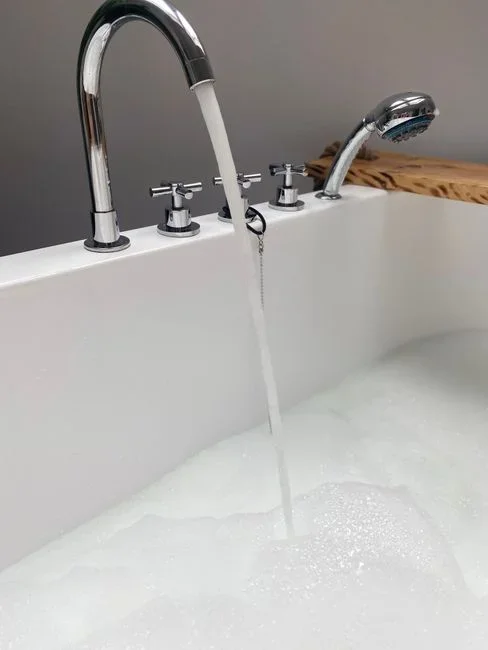
If the bare arm runs weak while the rest of the house is fine, the next suspect is behind the wall — Moen's shower sequence ends with replacing the cartridge. Limit: Tier 0 tells you where the restriction is, not what it is.
Tier 1 — descale the head, the way manufacturers actually say to
Hard water leaves scale that narrows spray holes and clogs the screens inside a head. Virginia Cooperative Extension states it plainly: mineral scaling in pipes can reduce water flow and pressure. Penn State Extension adds the threshold that decides whether this tier applies: below 7.0 grains per gallon, major scaling is unlikely. If you already fight that chalky film on the shower glass, you're in scale country.

Delta instructs soaking the head in a 50/50 mixture of white vinegar and water, saying outright it won't harm the finish. Moen permits a 50/50 blend of household vinegar and water across its finishes. The internet's version — full strength, overnight, or a commercial descaler — is where damage happens:
- No harsh cleansers, lime scale removers named explicitly, on PVD and electroplated finishes.
- No abrasives, ammonia, bleach, or solvents on powder coat and Spot Resist finishes.
- Never mix vinegar with bleach or any chlorine cleaner. New Jersey's health department warns the combination produces chlorine and chloramine vapors that burn the eyes and lungs.
- Delta's Touch-Clean heads get the spray face wiped, not soaked.
- Ignoring the cleaning instructions may void Moen's warranty.
A head isn't the only strainer. Moen also points at the screen between hose and hand-held wand, and EPA's aerator guidance covers your other taps: twist the aerator off, rinse and brush it, soak briefly, reassemble hand-tight. Limit: a head that was clean when you pulled it was never the problem.
Tier 2 — stop guessing and put a gauge on it
An inexpensive gauge that threads onto a hose bibb turns the argument into a number. EPA's procedure: attach it to a hose bibb, the washing machine cold hookup, or a first-floor cold faucet, and turn the water fully open — testing each supply separately if you have two. Read it against three sourced benchmarks, not the "40 to 80 psi" rule of thumb:
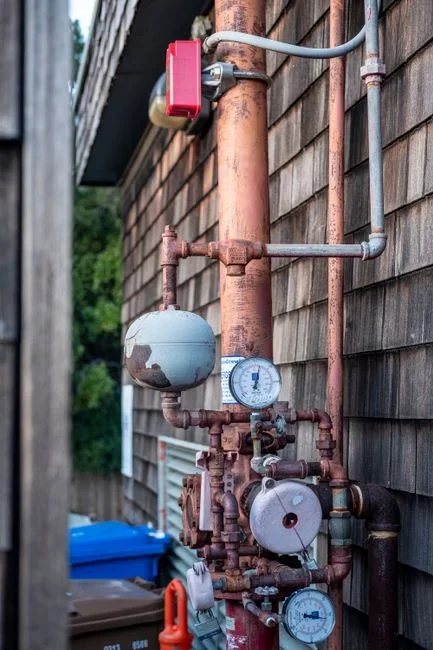
| Reading | What it means |
|---|---|
| Above 80 psi | Where most U.S. plumbing codes require a pressure-regulating valve |
| 45–60 psi | Incoming service pressure EPA WaterSense recommends |
| At least 20 psi | Distribution floor a majority of states impose on the utility |
A WaterSense labeled head is built to keep working when supply is poor: flow at only 20 psi must be at least 60 percent of rated maximum, with 2.0 ounces (0.56 newtons) of spray force. Healthy gauge but a labeled head still trickling? The restriction is in the head or valve — back to Tier 0.
Whole-house causes, cheapest to eliminate first
1. The main shutoff or meter valve, partly closed
Costs nothing to check, and easy to leave half-closed after work on the house. Ruled out when both valves sit hard against their stops.
2. A treatment device or overdue cartridge
Treatment adds resistance by design. Penn State Extension notes that for acid-neutralizing filters, the resistance of the neutralizing material may lower water pressure. Ruled out when a fresh cartridge changes nothing.
3. A pressure-regulating valve that has drifted or failed
Your Tier 2 reading exposes this, which is why the gauge comes first. Ruled out when your gauge sits in the sourced range. It's also where you'll want to know which plumbing jobs are a cheap part and which are a real call-out — but read the next section first.
4. Internal scale and corrosion in old pipe
The diagnosis of exclusion. Penn State documents corrosion severe enough to cause leaks — bluish-green stains, a metallic taste in the morning's first water, pinholes — with soft acidic water below pH 7.0 being more corrosive. No .gov or extension source found here documents the popular claim that corroding galvanized pipe narrows the bore enough to kill pressure. Ruled out when a plumber has inspected — not before.
The myth: "just drill out the flow restrictor"
It only helps if the restrictor was the actual bottleneck. If the head is scaled or supply pressure is genuinely low, the restrictor was never what held you back — and a labeled head is specified to hold flow at low pressure anyway.
It puts the fixture outside the standard everything is built around. Federal rules cap showerheads at 2.5 gallons per minute (9.5 L/min) at 80 psi, for heads manufactured after January 1, 1994; a WaterSense label means no more than 2.0 gpm. Read what that binds: manufacture and sale. It is not a federal offense to modify a head already on your wall, whatever you've been told. But the intent is unambiguous — the rule requires the insert be retained so 8.0 pounds of force is needed to remove it, and the WaterSense specification forbids instructions that direct users to override the maximum flow rate.
And it costs you. Some states set stricter limits than the federal cap, so a modified fixture can land on the wrong side of local rules and your warranty — and you keep paying for the extra hot water. EPA puts the saving from labeled heads at 2,700 gallons a year for the average family.
The line you do not cross: PRVs, expansion tanks, and the T&P valve
When a check valve, pressure-reducing valve, or backflow preventer sits in the service pipe, a closed system is created and provisions must be made for thermal expansion. Heated water expands, and in a closed system that volume has nowhere to go, so pressure climbs. That's why code pairs a PRV with an expansion tank and a temperature-and-pressure relief valve on the heater.
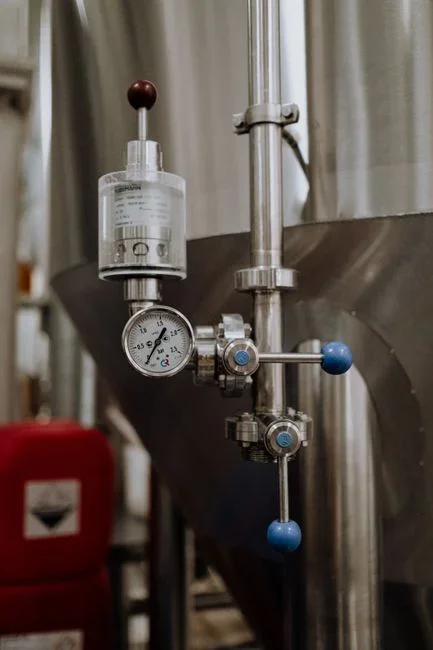
A T&P valve opens on temperature around 210 °F (99 °C) and on pressure at a preset 125 or 150 psi. If a thermostat fails to shut off and water passes 212 °F (100 °C), it becomes superheated, flashes to steam the instant a faucet opens, and the tank may explode. The discharge scalds, which is why a drain line is required.
Your job in full: confirm an expansion tank and T&P valve are present, look for signs the T&P has been altered, capped, or plugged, and call a licensed plumber — the source says this work is best done and checked by one. Do not adjust a PRV, drain an expansion tank, or poke a T&P test lever. And if this has you eyeing the tank, read what your thermostat setting really costs before touching the dial.
When it isn't your house at all
Gauge reads low with the house quiet? EPA's distribution guidance names what utilities investigate: storage tank location, missing pressure reducing valves, tank levels and pump setpoints, changes in demand, new customers, and pipe condition causing frictional losses — and an event may last seconds, hours, or longer.
Give them your reading, the time of day, and whether it's constant or intermittent. Quote the floor: a majority of states set 20 psi, and Texas requires at least 35 psi normally and never below 20 psi during fire flow — one state's example, not a national rule. But Portland's code says the Water Bureau does not guarantee a particular pressure or rate of flow.
The honest tier list
| Verdict | Claim | Why |
|---|---|---|
| REAL | Test the bare shower arm | Free, five minutes, locates the fault |
| REAL | 50/50 vinegar soak, toothbrush | Published by Moen and Delta; costs pennies |
| REAL | Hose-bib gauge before spending | Turns opinion into a number |
| MYTH | "Drill out the flow restrictor" | Not the bottleneck if scale or supply is; costs your warranty |
| MYTH | "Normal pressure is 40–80 psi" | Trade lore; the sourced numbers are 80 and 45–60 psi |
| DANGEROUS | Adjusting a PRV or T&P valve | Closed system plus heat ruptures tanks |
| DANGEROUS | Full-strength vinegar or descaler | Prohibited on plated and coated finishes |
Common mistakes
- Buying a new head first. If the supply is the problem, you've spent money and learned nothing.
- Skipping the second-tap test. This is how people lose a Saturday to a shower valve when the fault was the main.
- Full-strength vinegar overnight. Both makers publish 50/50; descalers are prohibited on plated and coated finishes.
- Reaching for the PRV screw. Gauge first, plumber second, screwdriver never.
FAQ
My shower is weak only in the morning. What's that?
Likely demand, not damage. EPA's distribution guidance lists changes in demand and pump setpoints among the causes of pressure variation. Gauge it weak and strong, then call the utility with both numbers.
How do I know if scale is even plausible in my house?
Ask your supplier for the hardness figure or test it. Penn State Extension puts the practical line at 7.0 grains per gallon — below that, major scaling is unlikely and Tier 1 probably isn't your answer.
What if my pressure reads too high instead?
That sends you to a professional, not a hardware store. EPA notes supply mains can reach 100 psi or more, and that high pressure damages piping, fixtures, and appliances while raising water use and leak risk. Above 80 psi, most codes require a PRV.
The takeaway: Pull the showerhead off before you buy anything, because five free minutes tells you whether you're fixing a fixture or chasing a house. Spend less. Live more. — The Thrifty Almanac






0comments